

9 min read · collector guide
How to Spot Fake Designer Bags Before You Buy or Sell
Designer bags can be profitable thrift finds, but counterfeit risk changes the entire resale equation. A bag that looks valuable can become unsellable if the construction, materials, hardware, serial details, or seller story do not hold up. This guide shows practical red flags to check before you buy, list, or accept an offer.
AI summary
This guide explains how to spot fake designer bags by checking construction, stitching, leather, hardware, logo quality, interior labels, serial or date details, packaging, seller signals, and when to use professional authentication.
PriceSnap is a mobile app for iOS and Android.
Use the app while reading this guide to scan items, estimate resale value, check marketplace comp signals, and save finds to your collection.
Key takeaways
- No single photo detail proves a designer bag is real; authenticity is a pattern of evidence.
- Stitching, materials, hardware, logo quality, interior labels, smell, shape, and packaging all matter.
- Serial or date details can support authenticity, but they can also be copied by counterfeiters.
- Use PriceSnap for value context, then use professional authentication for high-value resale decisions.
Try alongside this guide — scan straight from your camera roll.
Start With the Whole Bag
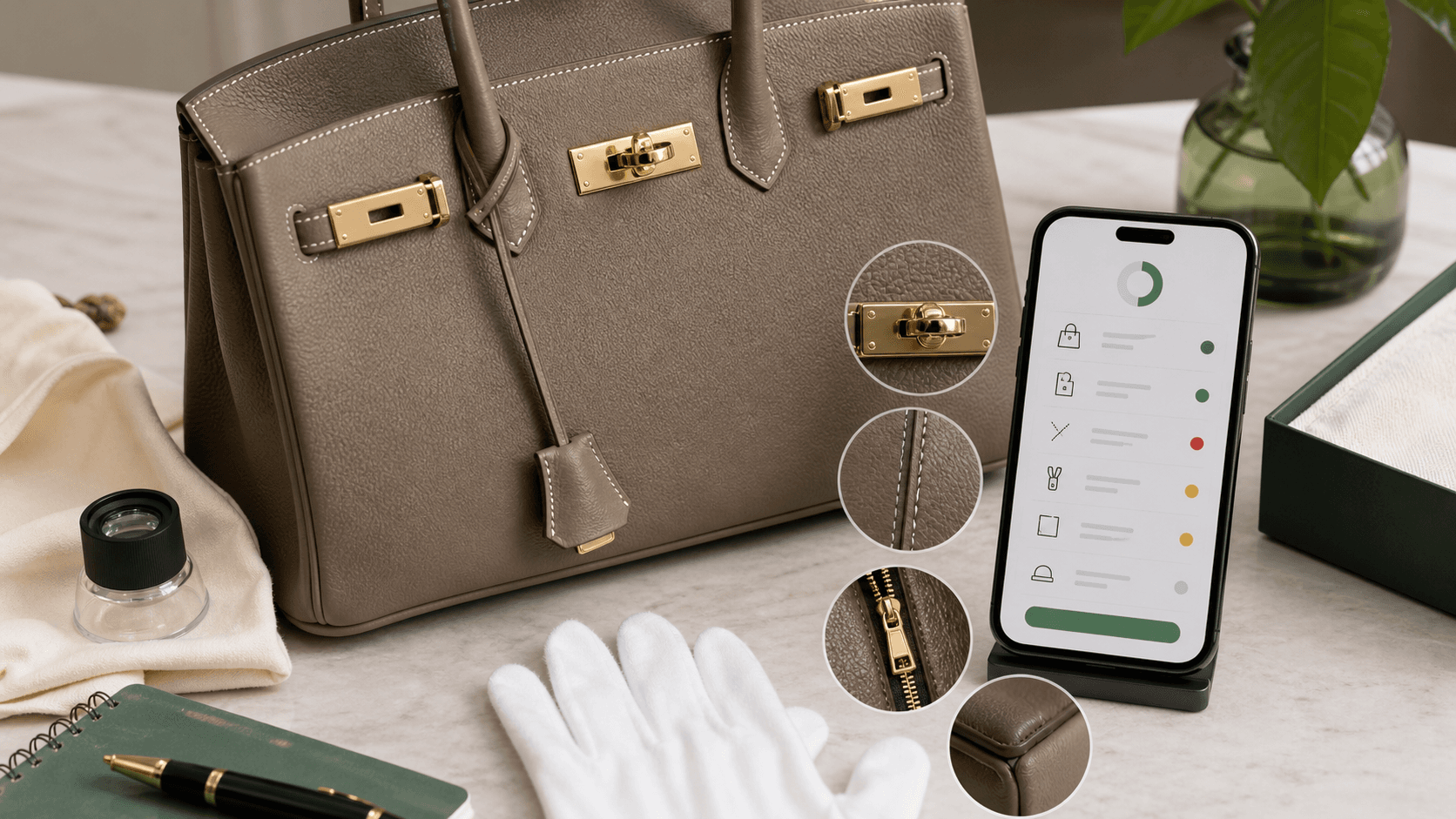
Do not authenticate from one logo, one serial code, or one blurry photo. Look at the full shape, proportions, structure, leather or canvas texture, hardware, stitching, lining, interior labels, zipper pulls, strap attachments, and wear patterns. A genuine bag usually feels consistent across all details; counterfeits often look acceptable in one area and weak in another.
Inspect Stitching and Construction
Stitching should be even, secure, and appropriate for the bag style. Watch for loose threads, crooked seams, uneven spacing, weak edge paint, poor glazing, sloppy corners, and misaligned panels. Construction quality is hard to fake perfectly because it depends on materials, pattern cutting, assembly, and finishing.
Check Materials and Smell
Leather, coated canvas, suede, and lining should feel consistent with the claimed brand and model. Red flags include plastic-like stiffness, chemical smell, peeling coating, thin hardware plating, weak lining, and materials that feel too light for the design. Some vintage bags have age and storage odor, but harsh chemical smell is worth caution.
Study Hardware, Zippers, and Logos
Hardware should feel solid, align cleanly, and age consistently with the bag. Check zipper movement, logo engraving quality, clasp function, screw heads, chain weight, rivets, and color consistency. Poor spacing, shallow engraving, incorrect finish, and lightweight hardware are common warning signs.
Understand Serial and Date Details
Serial numbers, date codes, authenticity cards, and interior labels can help identify a bag, but they do not prove authenticity on their own. Counterfeiters copy these details. Use them as supporting evidence alongside construction, material, hardware, seller history, and professional review.
Evaluate Packaging and Accessories
Dust bags, boxes, receipts, tags, cards, locks, keys, straps, and booklets can increase buyer confidence, but accessories can also be fake or mismatched. Check whether accessories fit the bag, model, age, and condition story. A perfect receipt with a poor-quality bag should not override obvious construction problems.
Watch the Seller Story
Secondhand buying is also about source risk. Be careful with vague origin stories, pressure to buy quickly, refusal to provide extra photos, prices far below market, stock photos, no return path, and missing close-ups of key areas. If the seller avoids direct questions, lower your confidence.
Use Value Tools and Authentication Together
PriceSnap can help you estimate what a designer bag might be worth if it is authentic and in the stated condition. That is different from authentication. For high-value bags, use PriceSnap for value context, then get professional authentication before listing, buying, or accepting a serious offer.
Related categories
FAQ
How to Spot Fake Designer Bags Before You Buy or Sell — FAQ
Straight answers about accuracy, platforms, and how PriceSnap fits your workflow.
How can I tell if a designer bag is fake?
Check the whole pattern: stitching, material quality, hardware, logo placement, interior labels, serial or date details, packaging, smell, shape, and seller credibility. Use professional authentication for high-value bags.
Can PriceSnap authenticate designer bags?
PriceSnap can help estimate value and flag risk signals, but it is not a professional authentication service. Expensive bags should be authenticated before resale.
Are serial numbers enough to prove a bag is real?
No. Serial, date, or authenticity details can be copied. They should support the rest of the evidence, not replace material and construction checks.
What is the biggest red flag when buying a designer bag secondhand?
The biggest red flag is a deal that depends on the bag being authentic while the seller cannot provide clear photos, provenance, or condition details.