

6 min read · collector guide
Do Not Overpay: Scan Before You Buy
The easiest way to lose money on a collectible or thrift find is to buy first and research later. This guide teaches a simple habit: scan before you buy, compare real market prices, check condition, and only pay when the numbers still make sense.
AI summary
This guide explains how to scan thrift finds, collectibles, antiques, toys, cards, and resale goods before buying so shoppers can avoid overpaying and compare real sold comps.
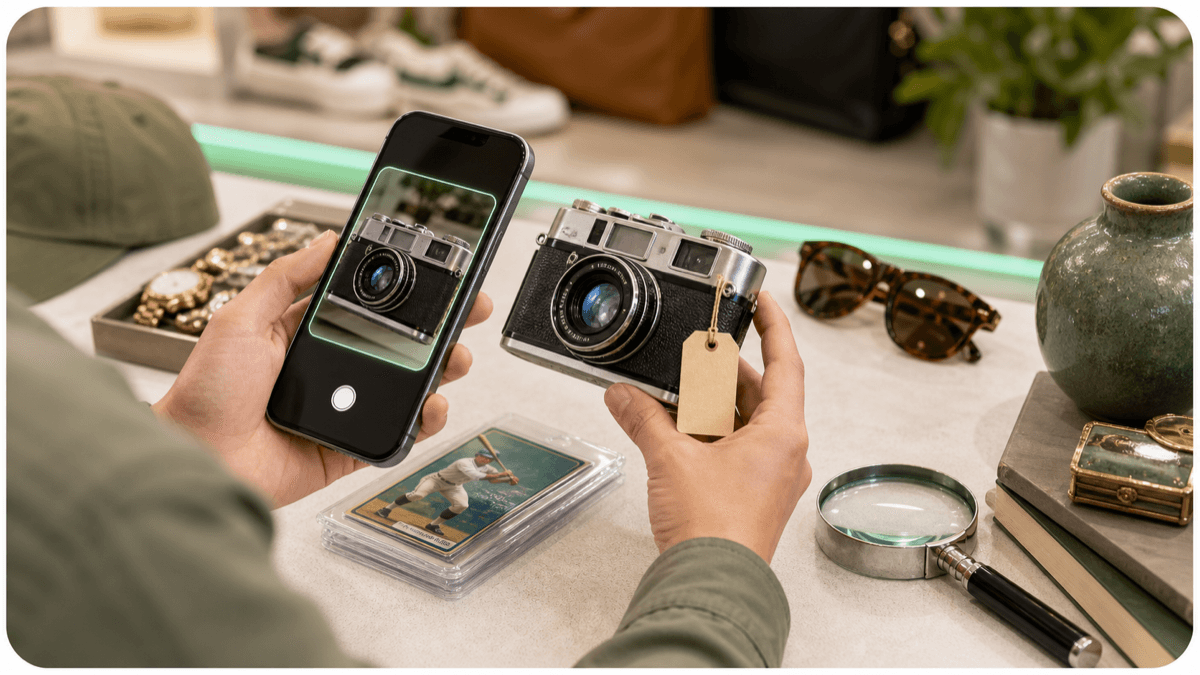
PriceSnap is a mobile app for iOS and Android.
Use the app while reading this guide to scan items, estimate resale value, check marketplace comp signals, and save finds to your collection.
Key takeaways
- Scan before buying to compare the shelf price against recent market value.
- Use clear photos of the full item plus labels, marks, serial numbers, and damage.
- Base buy decisions on sold comps, not seller asking prices.
- Walk away when confidence is low, comps are weak, or hidden costs erase margin.
Try alongside this guide — scan straight from your camera roll.
Why You Should Scan Before You Buy
A shelf price is only the seller's opinion. The real question is what similar items actually sold for recently, in similar condition, with similar completeness. Scanning before you buy gives you a fast second opinion before emotion, rarity claims, or a “good deal” sticker pushes you into a bad purchase.
Start With a Clear Photo
Take one clean photo of the full item, then capture any labels, maker marks, serial numbers, signatures, dates, model numbers, or damage. For cards, coins, jewelry, electronics, antiques, and toys, these small details often change the value more than the item category itself.
Compare Sold Prices, Not Asking Prices
A listing price does not prove value. Sellers can ask any amount; buyers decide the market. Use PriceSnap and sold-comparable research to look for recent completed sales, then compare condition, edition, packaging, and location before deciding whether the current price is fair.
Know When to Walk Away
If the scan confidence is low, the price range is too wide, or the item has condition issues you cannot price quickly, walking away is usually the smartest move. There will always be another find. Protecting your budget matters more than winning one uncertain deal.
Use a Simple Buy Rule
For resale, set your rule before shopping: buy only when the expected sale price leaves enough margin after fees and risk. For personal collecting, scan to confirm you are paying a fair market price. Either way, the habit is the same: scan first, buy second.
Related categories
FAQ
Do Not Overpay: Scan Before You Buy — FAQ
Straight answers about accuracy, platforms, and how PriceSnap fits your workflow.
Why should I scan before I buy?
Scanning before buying gives you a quick second opinion on resale value before a price tag, rarity claim, or impulse purchase leads to overpaying.
What should I photograph for the best price check?
Photograph the full item, labels, maker marks, model numbers, serial numbers, dates, and visible damage so the estimate can account for identity and condition.
Should I trust asking prices?
No. Asking prices are not market value. Use recent sold comps and comparable condition to decide whether the current price is fair.
Can PriceSnap help at thrift stores and garage sales?
Yes. PriceSnap is built for quick in-aisle or on-site checks when you need a directional value range before buying.