

8 min read · collector guide
Sneaker Resale Value Guide: How to Price Used and Collectible Sneakers
Sneaker value changes with model, colorway, size, condition, box status, release supply, and buyer demand. This guide explains how to price used and collectible sneakers without relying on hype alone.
AI summary
This guide explains sneaker valuation using exact model and colorway, size, condition, box and accessories, authenticity risk, release scarcity, sell-through, and recent comparable sales.
PriceSnap is a mobile app for iOS and Android.
Use the app while reading this guide to scan items, estimate resale value, check marketplace comp signals, and save finds to your collection.
Key takeaways
- Exact model, colorway, size, and release year matter before any sneaker value comparison.
- Used sneaker value depends heavily on outsole wear, creasing, stains, odor, heel drag, and box status.
- Deadstock and lightly worn pairs should be priced differently from heavily worn pairs.
- PriceSnap can scan sneakers for a fast starting estimate, but high-value pairs may still need authentication.
Try alongside this guide — scan straight from your camera roll.
Identify the Exact Sneaker First
Do not price sneakers by brand name alone. You need the model, colorway, size, release year, SKU if available, and whether the pair is a special edition, collaboration, restock, or general release. Two similar-looking pairs can have very different resale demand.
Condition Signals Buyers Check
Used sneaker buyers inspect toe-box creasing, outsole wear, heel drag, midsole yellowing, stains, odor, liner tears, lace condition, and whether the original insoles are present. Photograph both shoes, soles, heels, toe boxes, size tags, and any flaws before pricing.
Box, Accessories, and Authenticity
Original box, extra laces, receipts, tags, and authentication paperwork can increase buyer confidence and resale value. Missing box does not make a pair worthless, but it usually narrows the buyer pool. For expensive pairs, authentication risk should be part of your buy/pass decision.
Use Sold Comps by Size and Condition
Sneaker prices are size-specific. Compare sales for the same size or a close size, then adjust for condition. Do not compare a clean worn pair with a deadstock pair and expect the same price. Recent sales are better than current asks because they show actual buyer behavior.
When a Sneaker Is a Good Flip
A good sneaker flip has enough spread between your buy cost and realistic resale value after cleaning, fees, shipping, and authentication. Avoid pairs with heavy odor, sole separation, severe drag, missing size tags, or authenticity uncertainty unless the price already reflects that risk.
How to Scan Sneakers With PriceSnap
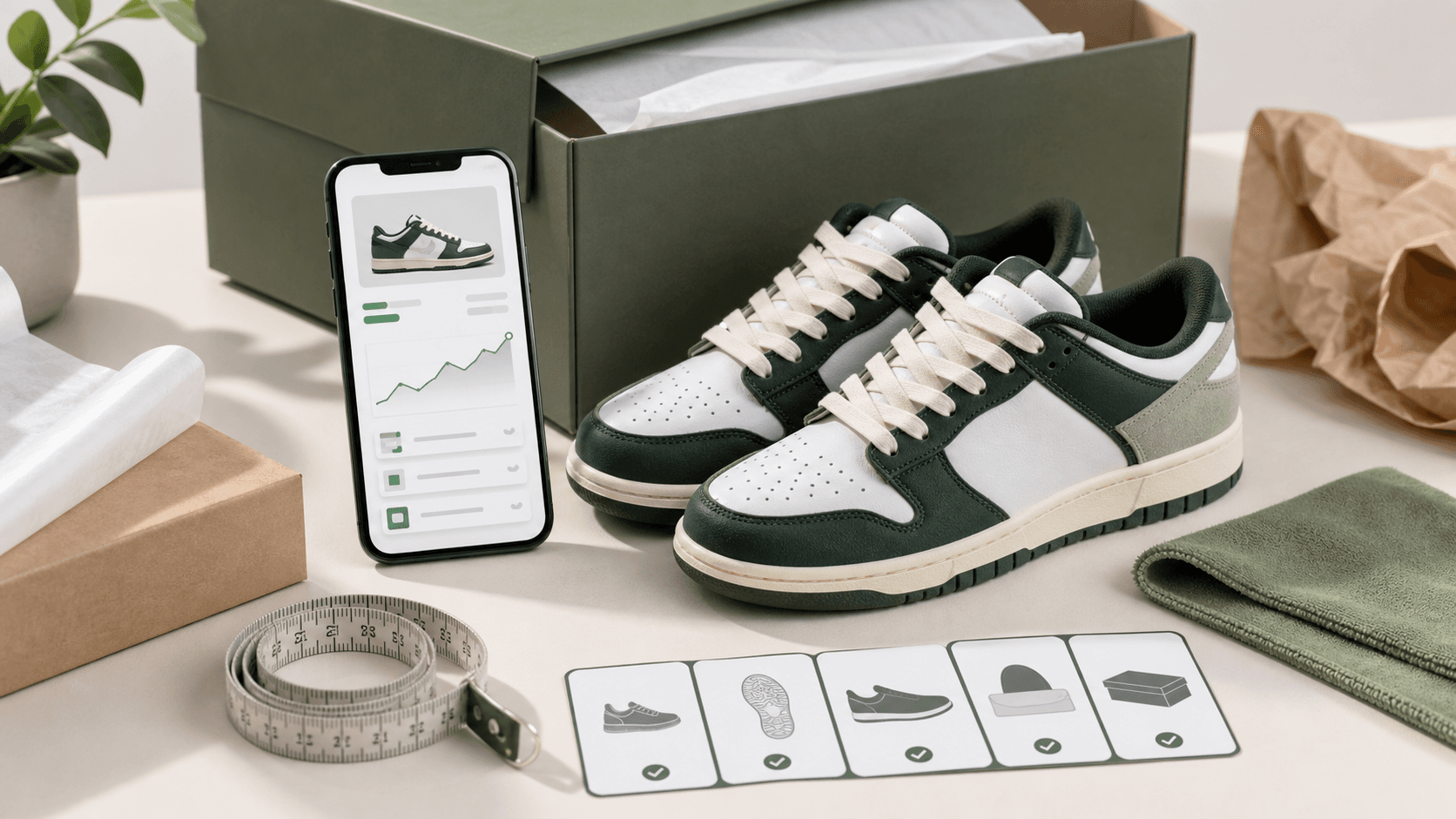
For the best scan, photograph the side profile, tongue or size tag, outsole, heel, and box label if available. Add a short note with the size and condition. PriceSnap can use those signals to produce a faster and more useful value estimate.
Related categories
FAQ
Sneaker Resale Value Guide: How to Price Used and Collectible Sneakers — FAQ
Straight answers about accuracy, platforms, and how PriceSnap fits your workflow.
How do I find the resale value of sneakers?
Identify the exact model, colorway, size, release year, condition, and box status, then compare recent sold comps for the same pair.
Does sneaker size affect resale value?
Yes. Common buyer sizes often have stronger liquidity, while very small or very large sizes can price differently depending on demand.
How much does condition affect used sneaker value?
Condition can change value dramatically. Heel drag, outsole wear, creasing, stains, odor, missing insoles, and damaged boxes all reduce resale value.
Can PriceSnap scan sneakers?
Yes. PriceSnap can scan sneaker photos and return a directional resale value estimate using visible model and condition cues.