

8 min read · collector guide
Watch Value Guide: How to Price Luxury, Vintage, and Everyday Watches
Watch values can swing widely based on reference number, condition, originality, service history, box and papers, and market demand. This guide explains how to estimate value for luxury, vintage, and everyday watches.
AI summary
This guide explains watch valuation using brand, model, reference, movement, dial, case condition, originality, service history, box and papers, authenticity risk, and comparable sales.
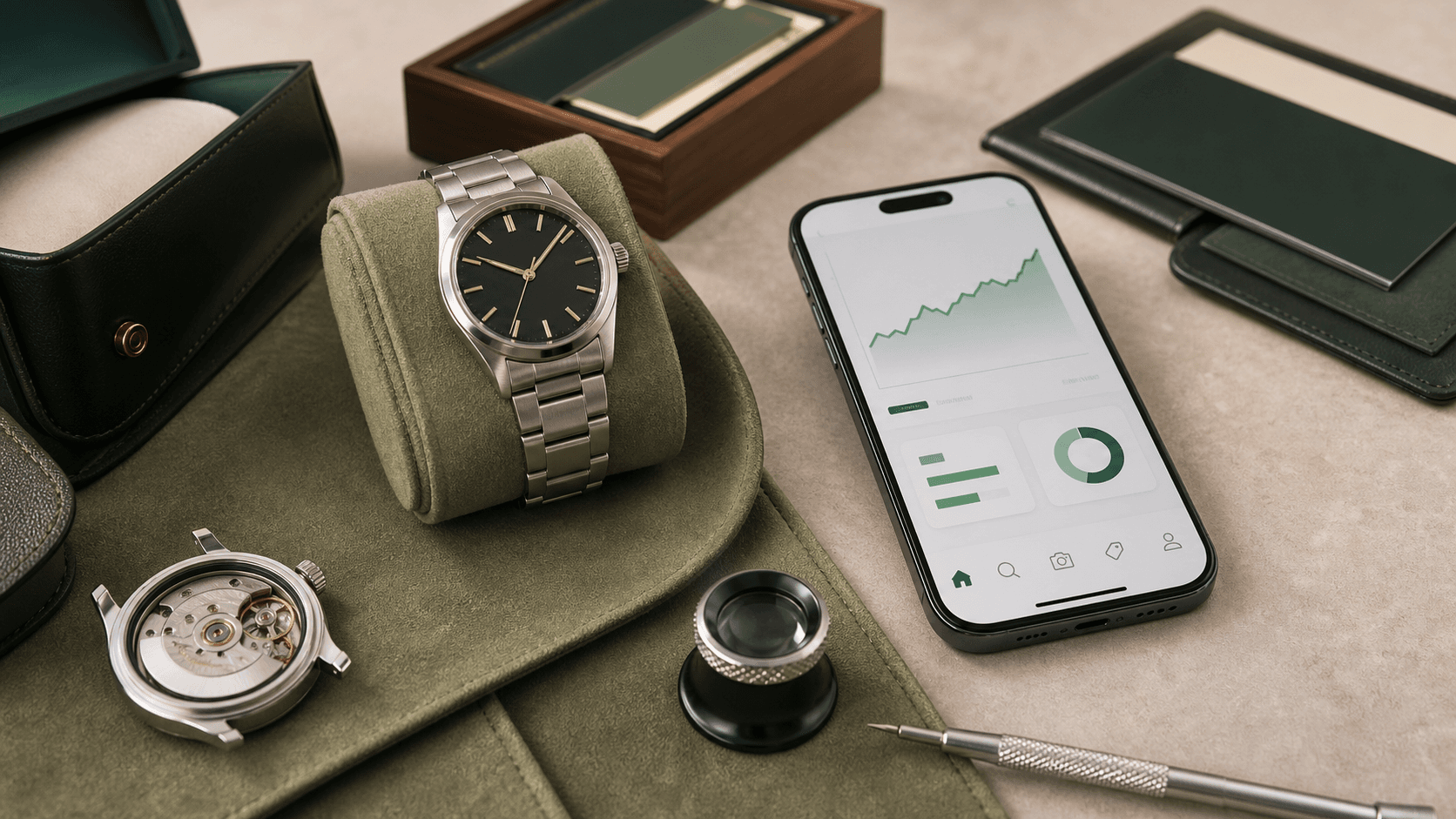
PriceSnap is a mobile app for iOS and Android.
Use the app while reading this guide to scan items, estimate resale value, check marketplace comp signals, and save finds to your collection.
Key takeaways
- The reference number, model, movement, case size, and dial variant are essential for watch pricing.
- Condition, originality, polishing, service parts, and bracelet stretch can materially affect value.
- Box, papers, receipts, and service history can increase buyer confidence.
- PriceSnap can provide a starting estimate, but high-value watches should be authenticated and inspected.
Try alongside this guide — scan straight from your camera roll.
Find the Reference and Model
Watch pricing starts with exact identification. Look for brand, model, reference number, case size, movement type, dial variant, bracelet or strap, and approximate production period. A small dial or bezel variation can change collector demand.
Originality and Condition
Collectors care about original dials, hands, bezels, crowns, bracelets, and case shape. Polishing, service parts, aftermarket parts, water damage, dial relume, and poor timekeeping can all affect value. For vintage watches, originality can matter as much as cosmetic cleanliness.
Box, Papers, and Service History
Original box, warranty card, receipts, tags, manuals, and service records create trust. A recent service from a reputable watchmaker may support value, while unknown service history can make buyers cautious.
Compare Similar Examples
Compare sold watches with the same reference, dial, material, bracelet, condition, and box/papers status. Asking prices can be inflated, especially in luxury watches. Use actual sales or accepted-offer signals when available.
Authentication and Inspection
Counterfeits and modified watches are common in high-value categories. A photo-based estimate is a starting point, not a final authentication. If a watch may be expensive, get it inspected before buying, selling, or insuring it.
How to Scan Watches With PriceSnap
Photograph the dial, case sides, caseback, bracelet or strap, clasp, box/papers, and any visible reference details. Add notes for service history and known issues. PriceSnap can help you decide whether deeper watch research is justified.
Related categories
FAQ
Watch Value Guide: How to Price Luxury, Vintage, and Everyday Watches — FAQ
Straight answers about accuracy, platforms, and how PriceSnap fits your workflow.
How do I find the value of a watch?
Identify the brand, model, reference, movement, size, dial, condition, service history, and box/papers status, then compare recent sales.
Do box and papers affect watch value?
Yes. Original box, papers, receipts, warranty cards, and service records can improve buyer confidence and may increase resale value.
What condition issues lower watch value?
Heavy polishing, replacement parts, dial damage, water damage, poor timekeeping, bracelet stretch, missing links, and unknown service history can lower value.
Can PriceSnap scan watches?
Yes. PriceSnap can scan watch photos for a directional value estimate, but expensive watches should be authenticated and inspected by a specialist.